
Case study
Neighbor Radio
neighborradio.com
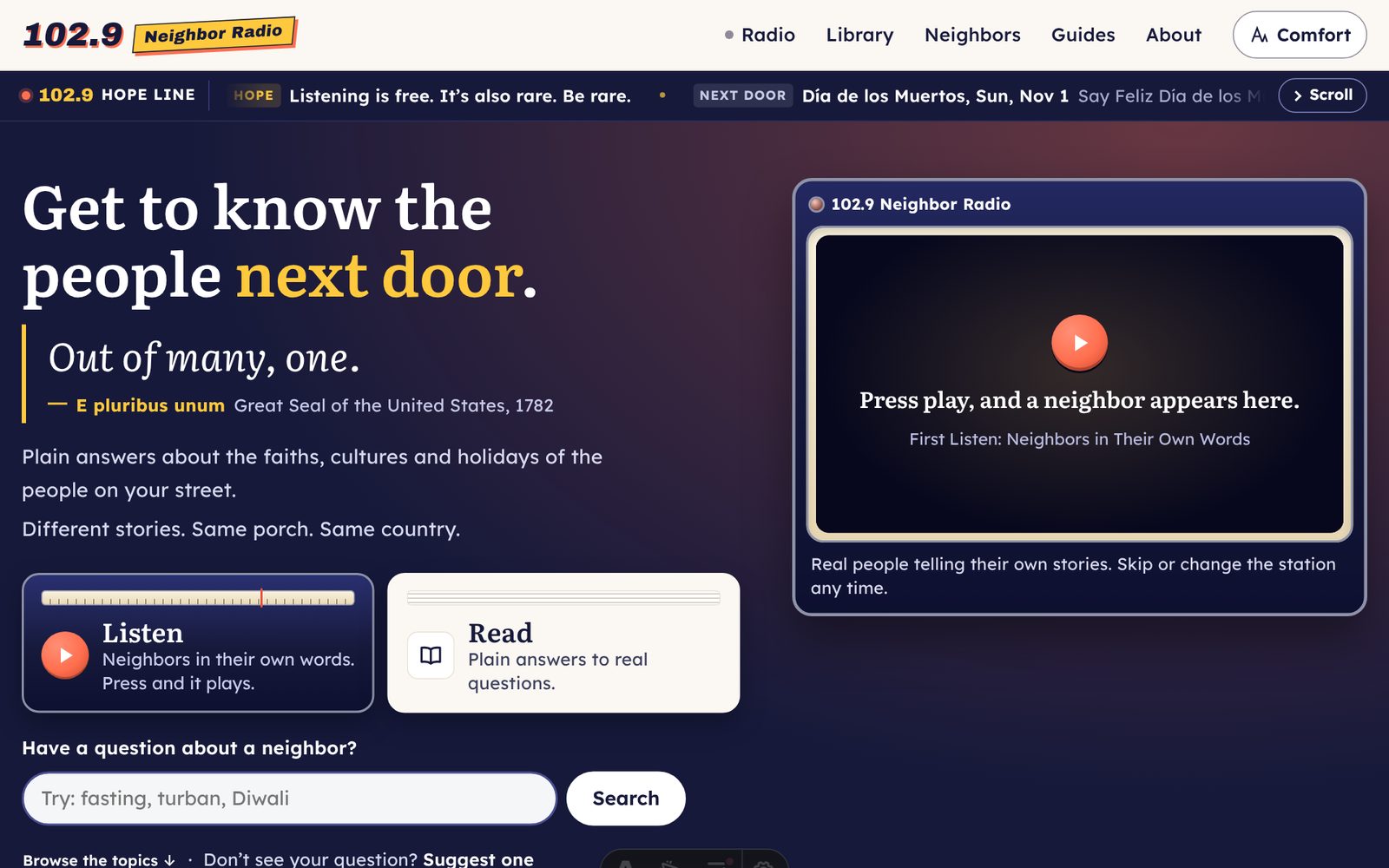
Know what to say to the people next door.Neighbor Radio gives plain answers about the faiths, cultures and holidays of the people next door, so you know what to say, what to bring and how to show up.
Made for these moments
- Someone new moved in next door“Is it rude to ask ‘Where are you from?’”
- Their holiday is coming up“What is Ramadan, and how do I wish a Muslim neighbor well?”
- You're invited to a serviceLearn what to expect at a church, mosque, synagogue, gurdwara or powwow.
- Someone just lost someone“What is shiva, and should I visit?”
The real problem
Most people want to be good neighbors. They just don't want to say the wrong thing. So they don't ask, and headlines and guesses fill the gap.
How one answer works
Every answer follows the same shape. Here is how it works for “Am I American enough?”
- 1 · MindWhat's true
The 14th Amendment says all persons born or naturalized here are citizens. Nothing in it mentions skin, last names or religion.
- 2 · HeartWhat it feels like
It's tiring to be asked where you're really from when the answer is Fresno.
- 3 · HandsWhat to do
If you're the neighbor, say it out loud sometime: “You belong here.”
“The last time you decided someone wasn't quite from here, what were you looking at?”
Where the numbers come from
It is the drill-site habit again. Before you trust a number, ask who got counted. From the answer to “Am I American enough?” Every answer lists the sources it was checked against.
Hispanic adults who most often call themselves simply “American”
Source: Pew Research Center, 2020
Every answer is checked against sources like these
- Pew Research Center
- U.S. Census Bureau
- Congress.gov
- National Archives
- Library of Congress
- Smithsonian
- CDC
- National Institute of Mental Health
- 988 Suicide & Crisis Lifeline
- Encyclopaedia Britannica
- Stanford Encyclopedia of Philosophy
- Harvard Pluralism Project
- Sefaria
- My Jewish Learning
- Quran.com
- Hindu American Foundation
- Sikh Coalition
- National Congress of American Indians
What was built
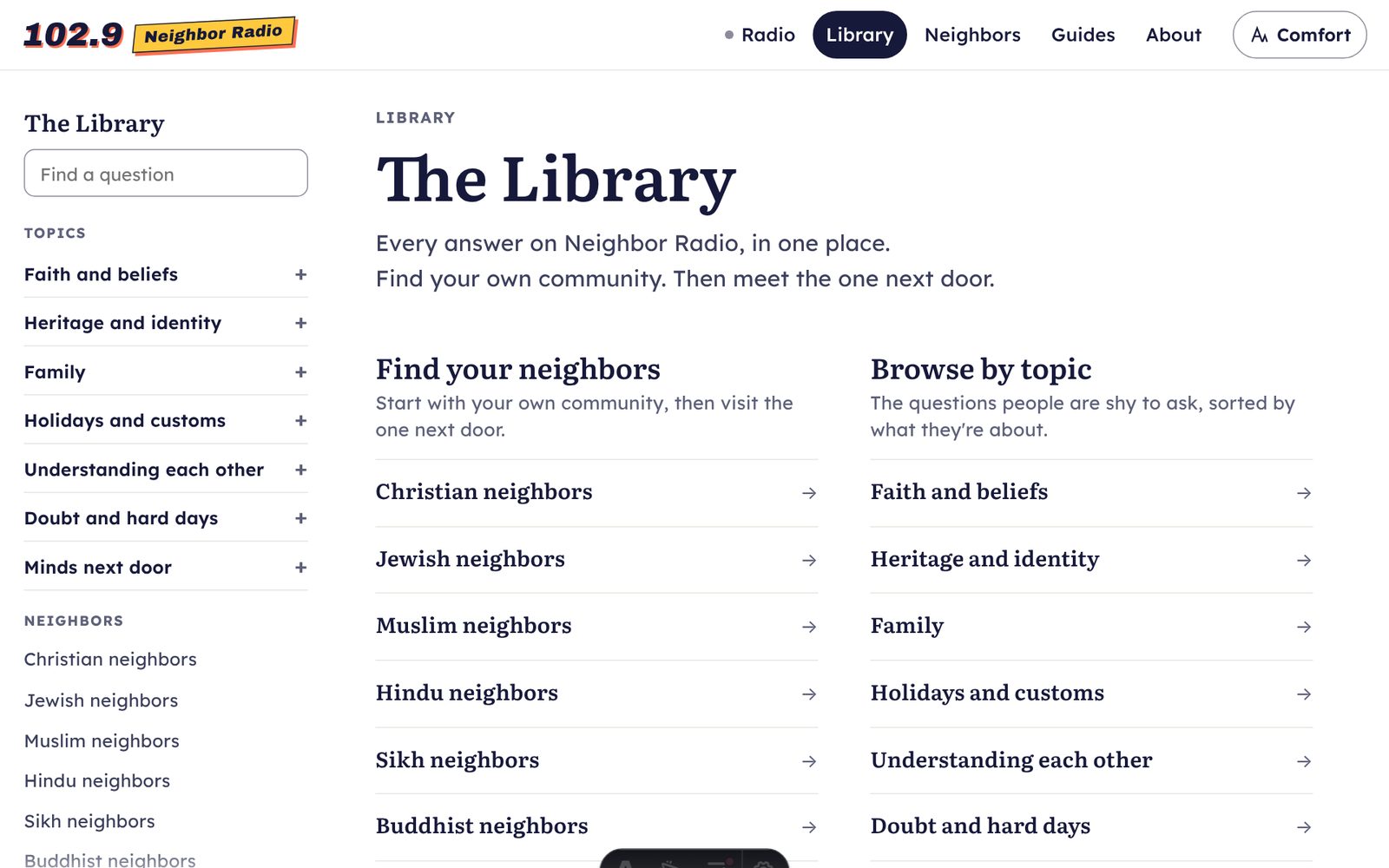
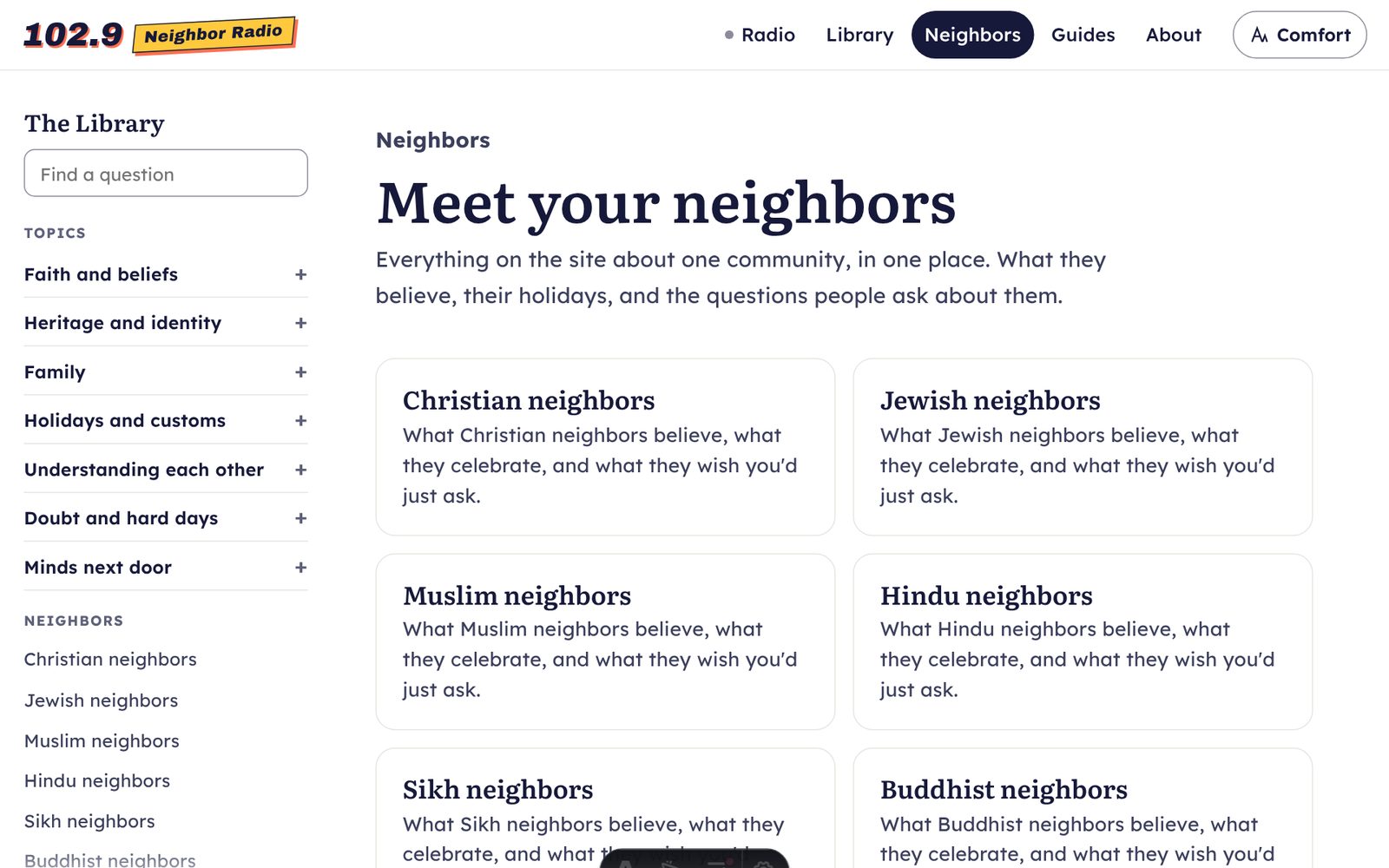
- Start from your situation. Pick the sentence that fits, like “My neighbor's holiday is coming up,” and get the few answers that matter right now.
- First-visit guides cover places from a church to a powwow, with what to wear, what to bring and what to avoid.
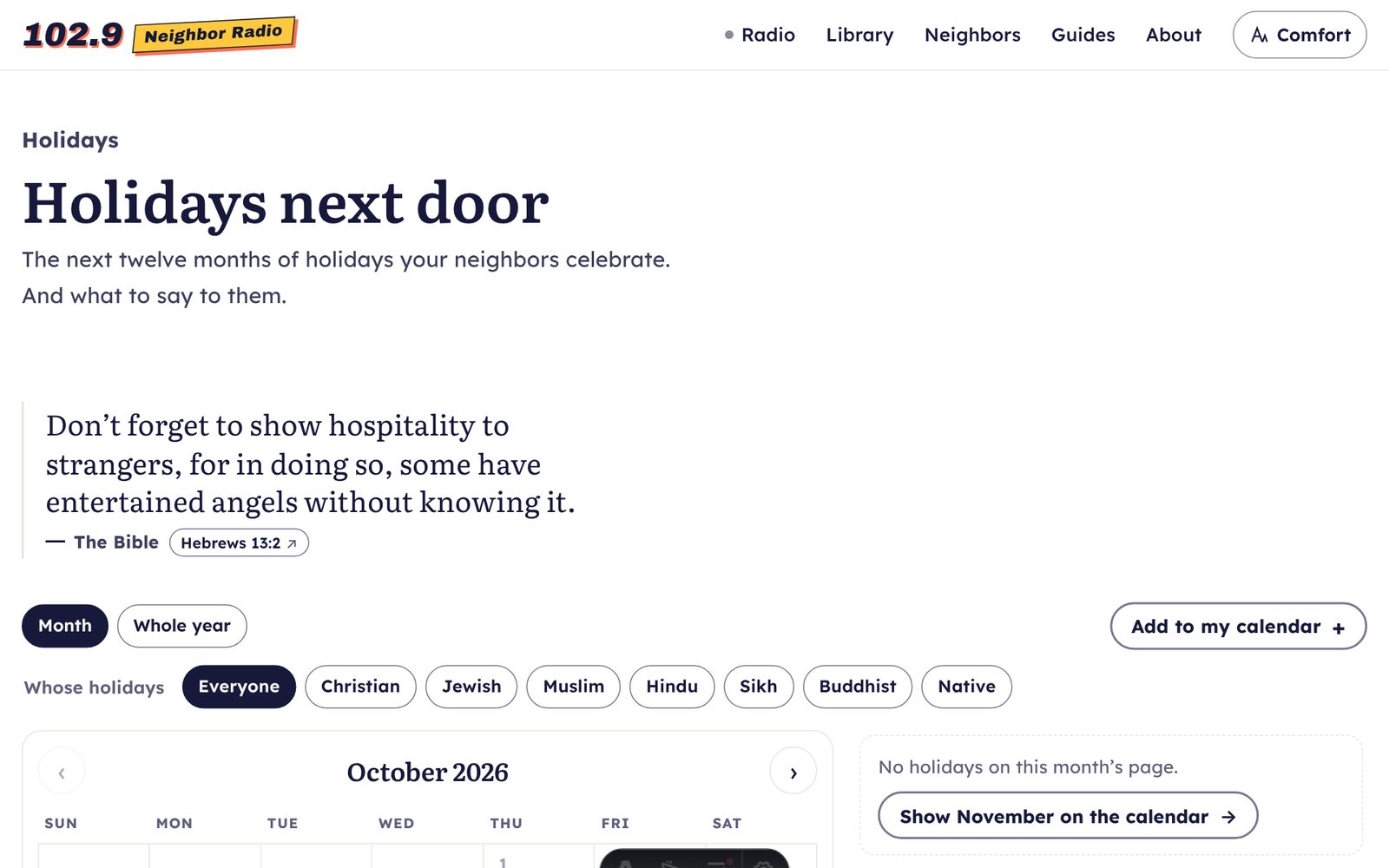
- A holiday calendar shows dates for the next few years, along with a simple way to wish anyone well.
- Recorded conversations in neighbors' own words are sorted by topic, like stations on a radio dial.
How it's built
- Every answer, holiday, word and timeline lives in a plain text file. Each build checks every file against one schema, a single set of rules for what a page must contain.
- Editors can change any word through a simple form that saves to GitHub. The same schema check runs before anything saves, so a slip in the form can't break the site.
- Audio of any length uploads straight from the browser to Vercel Blob. Recordings play only when a listener presses play, and every voice belongs to a real person.
What changed
- Who it's for
- Anyone curious about the people next door, plus reporters, teachers and congregations who need a plain answer they can check.
- Cost
- Free to use
More case studies
These projects show more of how he works.


